Looking for something?
What Spider Veins Mean, and When It’s Worth Getting Checked
- Spider Veins
- January 21, 2026

If you have noticed thin red, blue, or purple lines on your legs or face, you might have paused and wondered what they mean. Are spider veins just something cosmetic, or could they be a sign of something more? Is this normal, or should you be paying closer attention?
These are very common questions. Many people notice spider veins gradually and are not sure whether they are worth bringing up, especially if they are not painful or dramatic. Wanting clarity does not mean something is wrong. It simply means you are paying attention to your body.
Understanding what spider veins are, and when it can be helpful to have them checked, can ease uncertainty and help you decide what feels right for you.
What are spider veins?
Spider veins are small blood vessels that sit close to the surface of the skin. They often look like fine lines or branching patterns and tend to show up on the legs, although some people notice them on the face or other areas.
They develop over time as the tiny valves inside your veins become less efficient. When blood does not move upward as easily as it should, it can collect and make those veins more visible through the skin.
Many people cannot pinpoint exactly when spider veins appeared. They often show up slowly, which is part of why they can be easy to ignore at first.
Are spider veins something to worry about?
For most people, spider veins are not dangerous. They are usually considered a cosmetic concern and do not pose an immediate health risk on their own.
That said, visible veins can sometimes reflect changes in circulation beneath the surface. This does not mean something serious is happening. It simply means that spider veins can occasionally appear alongside other vein changes.
For many patients, having someone take a look and explain what they are seeing brings peace of mind, even if no treatment is needed.
Why do spider veins show up?
There is rarely one clear reason spider veins appear. More often, they develop due to a mix of everyday factors that are part of normal life.
People often notice spider veins in situations like these:
- They have a family history of vein issues and were always a little more prone to them
- Hormonal changes, such as pregnancy or menopause, have affected circulation
- Long days spent standing or sitting have started to take a toll
- Natural aging has made veins less resilient over time
Because these influences are so common, spider veins can show up even in people who feel healthy and active overall.
Do spider veins cause symptoms?
Some people notice spider veins and feel nothing at all. Others describe subtle discomfort that is easy to brush off or chalk up to a long day.
You might notice things like:
- Legs that feel heavy or achy by the end of the day
- Mild swelling that comes and goes
- A burning, itching, or throbbing sensation near visible veins
- Legs that simply feel more tired than they used to
These sensations do not automatically mean there is a serious problem, but they are worth mentioning if they keep coming up or start to affect your comfort.
When does it make sense to have spider veins checked?
Many people wonder if their concern is “big enough” to bring up. There is no right or wrong reason to ask questions about your vein health.
It may be helpful to schedule an evaluation if any of the following sounds familiar:
- Your spider veins seem to be increasing or becoming more noticeable
- Your legs often feel uncomfortable, tired, or heavy
- Vein issues run in your family, and you want to be proactive
- You are unsure whether what you are seeing is purely cosmetic
- You would simply feel better having someone take a closer look
An evaluation is about information, not commitment. It gives you a clearer picture of what is happening so you can decide what to do next, if anything.
Are spider veins ever connected to larger vein issues?
Sometimes they can be. In some cases, spider veins appear alongside venous insufficiency, which is a condition where blood flow in the veins is less efficient than it should be.
This does not mean that everyone with spider veins has a larger vein issue. Many do not. An evaluation can help sort that out and rule out concerns, which is often reassuring on its own.
What does treatment look like if someone chooses to treat spider veins?
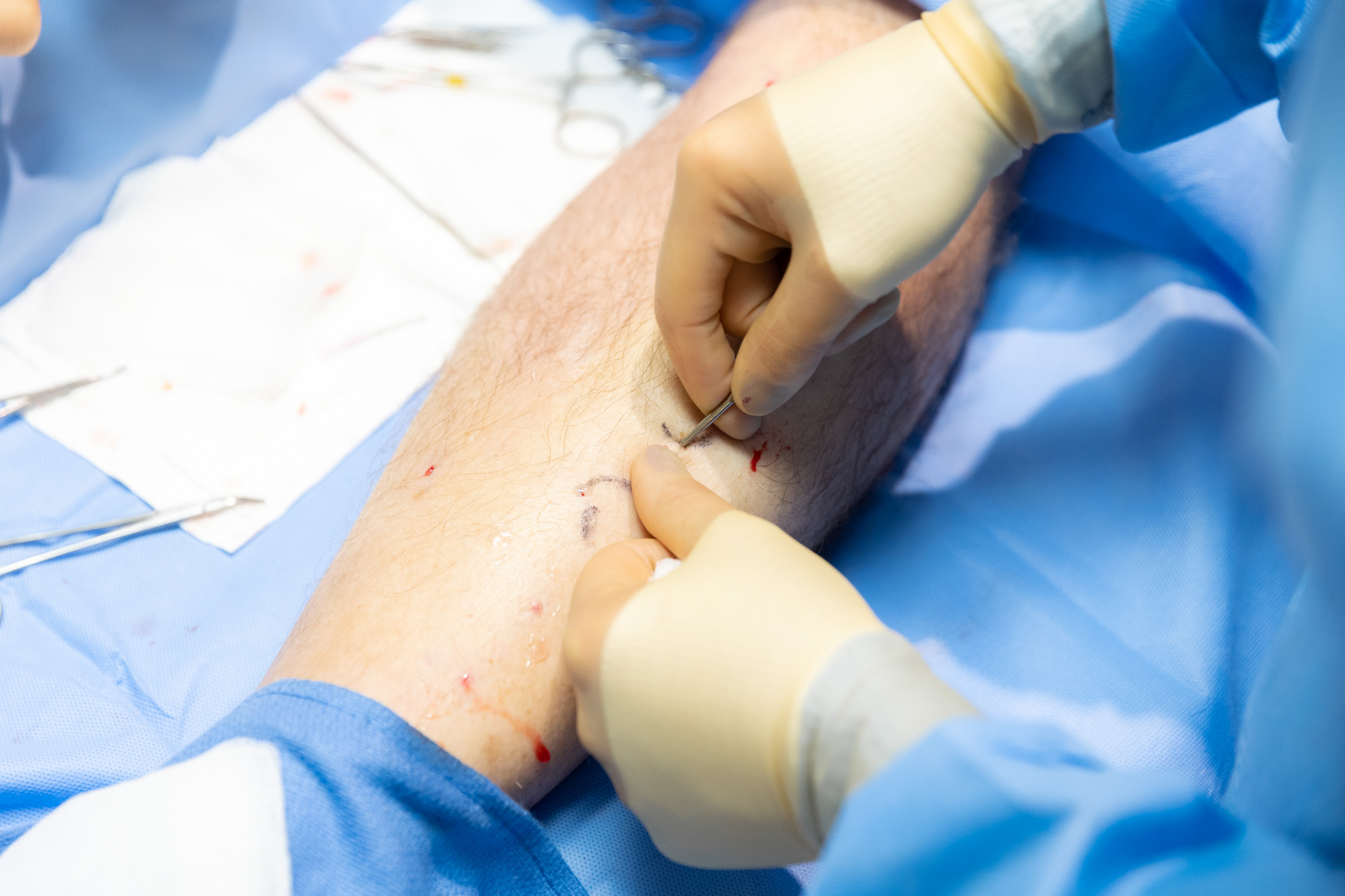
If treatment is appropriate and something you want to explore, there are medical options that focus on closing the visible veins so blood can naturally move through healthier ones.
Some people are treated with laser therapy. This uses focused light to gently target spider veins through the skin. Over time, the treated veins fade while the surrounding skin stays intact. This approach is often used for smaller veins or delicate areas like the face.
Others may be candidates for sclerotherapy. This involves using a very fine needle to place a solution into the vein, which causes it to close and gradually be absorbed by the body. This technique has been used for many years and is commonly used for spider veins on the legs.
In certain situations, providers may recommend combining approaches to more fully address the veins involved. Any treatment plan is based on your specific veins and your overall vein health, not a one-size-fits-all formula.
Is treating spider veins always necessary?
No. Many people decide not to treat spider veins, especially if they are not causing discomfort or concern. Treatment is optional and often based on how you feel, both physically and emotionally, rather than medical urgency.
An evaluation can help you understand whether treatment might be helpful or whether keeping an eye on things over time is a perfectly reasonable choice.
If you have questions about spider veins or want help understanding what you’re seeing, the team at Wisconsin Vein Center and MediSpa is available as a resource. We’re always happy to answer questions and provide clarity, whether or not treatment is something you’re considering.

Dr. Deborah Manjoney is a past Diplomate of the American Board of Surgery, the American Board of Thoracic Surgery, and the American Board of Venous and Lymphatic Medicine. She has had extensive training in laser medicine and surgery. She founded the Wisconsin Vein Center & MediSpa in 2002, where she specializes in vein treatments and minimally invasive aesthetic and laser procedures. Dr. Manjoney has received numerous awards and is a nationally recognized speaker and author of medical journal articles.